Rehabilitation
Stroke Rehabilitation: What Recovery Really Looks Like After a Stroke
Learn what stroke recovery involves and how physiotherapy can help improve mobility, balance, strength and independence after a stroke.
Understanding stroke recovery
A stroke can change a person's life in an instant. Simple tasks such as walking, getting dressed, holding a cup, or speaking may suddenly become challenging. While this can feel overwhelming, recovery is possible.
Stroke rehabilitation focuses on helping individuals regain as much independence, strength, mobility, and confidence as possible. Every stroke is different, which means every rehabilitation programme should be tailored to the individual's needs and goals.
What happens after a stroke?
A stroke occurs when blood flow to part of the brain is interrupted. As a result, certain functions controlled by that area of the brain may be affected.
Common challenges after a stroke include weakness on one side of the body, difficulty walking, poor balance and coordination, muscle stiffness or spasticity, reduced arm and hand function, fatigue, difficulty transferring between sitting and standing, and reduced confidence during movement.
The severity of these symptoms varies from person to person.
Why physiotherapy is important
Physiotherapy plays a critical role in stroke recovery. The brain has an incredible ability called neuroplasticity — it can form new pathways and relearn movement patterns through repetition and practice. Physiotherapy helps stimulate this recovery process by encouraging safe, purposeful movement.
Treatment may focus on improving walking ability, restoring balance, strengthening weak muscles, improving transfers and mobility, preventing falls, increasing endurance, reducing stiffness and contractures, and improving confidence during daily activities.
Early rehabilitation matters
Research consistently shows that early rehabilitation can significantly improve recovery outcomes. The earlier patients begin moving safely and appropriately, the greater the opportunity to regain function and independence.
This does not mean pushing through pain or fatigue. Instead, rehabilitation should progress gradually under professional guidance.
What does stroke physiotherapy involve?
A physiotherapy assessment helps identify the individual's specific limitations and goals. Treatment typically combines several approaches:
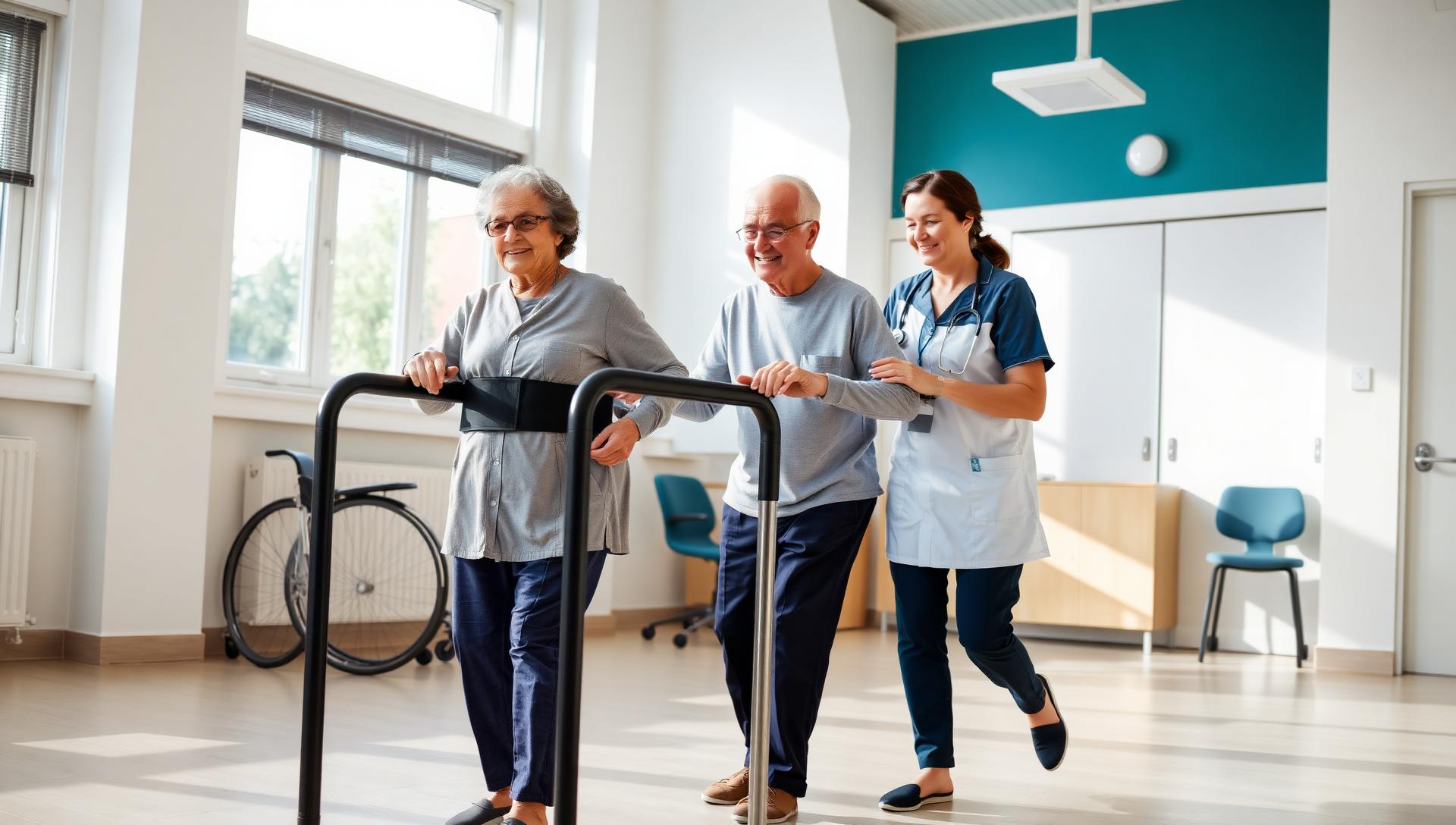
Walking retraining — practice may begin with assisted standing and progress toward independent walking. Balance training — exercises designed to improve stability and reduce fall risk. Strengthening exercises — targeted work to rebuild strength in weakened muscles.
Functional training — practising real-life tasks such as standing from a chair, climbing stairs, or getting into bed. Mobility exercises — maintaining joint movement and flexibility to prevent stiffness and discomfort. Home exercise programmes — exercises patients can safely perform between physiotherapy sessions.
Recovery takes time
One of the biggest misconceptions about stroke recovery is that improvement only occurs in the first few weeks. While the greatest gains often happen early, meaningful improvements can continue for months and even years with consistent rehabilitation and exercise.
Progress may seem slow at times, but small improvements often lead to significant long-term gains.
Supporting recovery at home
Family members and caregivers play an important role in recovery. Helpful strategies include encouraging regular movement, creating a safe home environment, removing trip hazards, following prescribed exercises, celebrating small achievements, and promoting independence whenever possible.
When should you seek physiotherapy?
Physiotherapy can be beneficial whether the stroke occurred recently or many months ago. Professional rehabilitation may help if you experience difficulty walking, frequent falls, reduced balance, weakness, reduced mobility, difficulty performing daily activities, or reduced confidence with movement.
Final thoughts
Recovery after a stroke is a journey, not a race. With the right rehabilitation programme, professional guidance, and consistent effort, many individuals can regain independence, improve mobility, and return to meaningful daily activities.
At KineticCare Physiotherapy, we provide evidence-based neurological rehabilitation tailored to each patient's unique recovery goals.
Key takeaways
- Stroke recovery is possible — neuroplasticity allows the brain to relearn movement at any stage.
- Early, consistent rehabilitation produces the strongest functional outcomes.
- Improvements can continue for months and years, not just the first few weeks.
- Caregivers and a safe home environment are central to long-term progress.
Next step
Book a stroke rehabilitation assessment with KineticCare Physiotherapy in Umhlanga for a personalised recovery programme.
Related services
Hands-on care at our Umhlanga practice for this concern.
Neurological Rehabilitation
Specialised rehab for stroke, brain and spinal cord injuries, focused on movement, balance and independence.
Post-Surgical Rehabilitation
Structured recovery after orthopaedic surgery — hip and knee replacements, ACL reconstructions, shoulder repairs and more.
Chronic Pain Management
An evidence-based plan to reduce long-term pain, restore function and rebuild confidence in movement.
Philani Sabela
Physiotherapist · KineticCare Physiotherapy (Pty) Ltd
PR No: 1324934 · Umhlanga, Durban, KwaZulu-Natal
Philani is a registered physiotherapist practising at Aurora Medical Centre in Umhlanga, treating spinal pain, sports injuries and post-surgical rehabilitation across Durban and KwaZulu-Natal.
KineticCare Physiotherapy · Umhlanga
Ready to move better, feel better, and live better?
Book a one-on-one assessment with Philani Sabela at Aurora Medical Centre, or reach out on WhatsApp or by phone — we'll help you take the next step today.